Muster explores brotherhood, vulnerability and Black masculinity at Dublin Fringe Festival
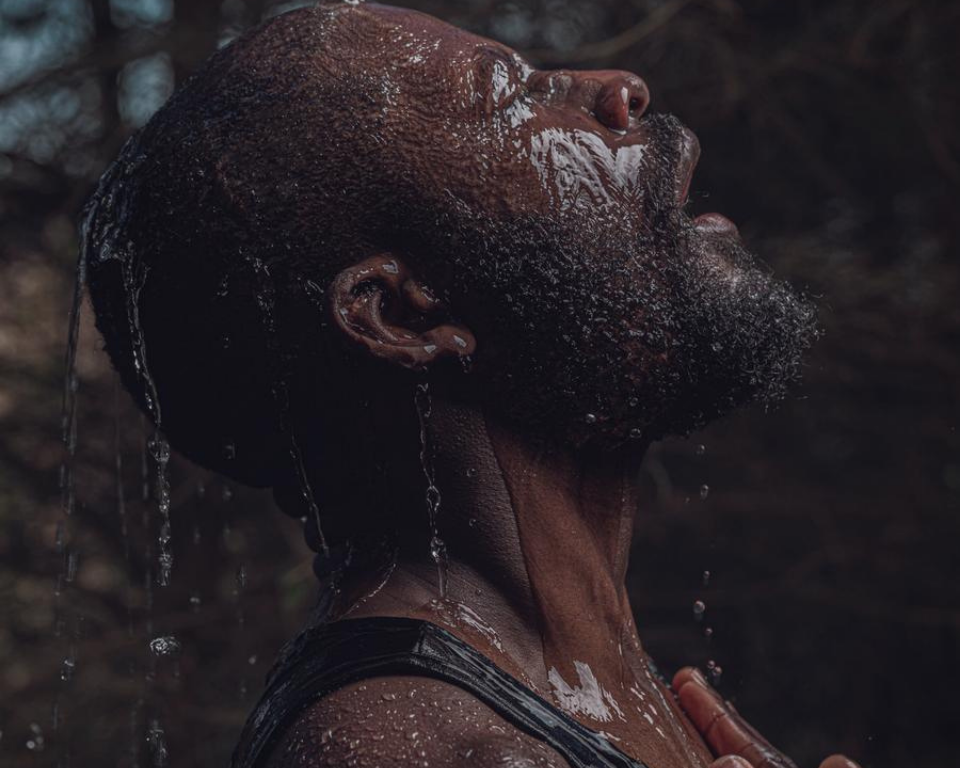
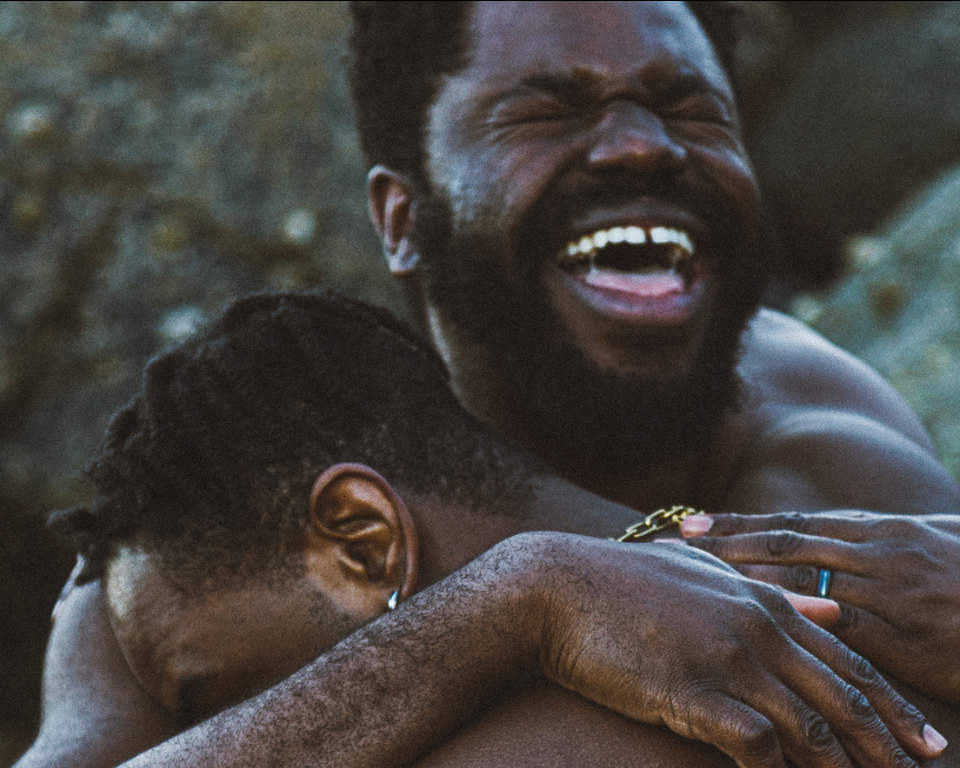
Produced by Belema Art House and written by Dagogo Hart, Muster brings an exploration of Black masculinity, male friendship and emotional vulnerability to The New Theatre as part of this year’s Dublin Fringe Festival.
Hart describes Muster as “a small step in a journey of giant steps”, an idea reflected in the show’s title.
Muster follows two friends who retreat to a garden after a funeral. Against a backdrop of hip hop, inside jokes and bravado begin to fall away as the pair confront grief, vulnerability and long-unspoken truths.
“I wanted the title to embody taking the small steps, mustering the courage,” Hart says. “I also loved how similar it sounded to ‘monster’ and how that was a good metaphor for what masculinity can feel like sometimes.”
The origins of the production can be traced to a poem written by Hart, ‘Home is a cocoon and all my niggaz are caterpillars’. The poem examines male friendship and the role those relationships can play in supporting mental health.
“The poem speaks on male friendships and the role it can play for our mental health,” Hart says. “I performed it a few times to music and it felt the most impactful in that form, almost like hip hop was the language of both the art and the audience. And that’s when I decided to make it into a full play but keeping the language.”
At the centre of Muster are two friends and what begins as a eulogy gradually becomes an excavation of their relationship. The repeated use of the word “brother” became particularly significant to Hart during the writing process.
“I call all my male friends bro or brother,” he says. “And during the process of writing Muster, the characters will refer to each other as bro all the time. And I just found it interesting that while we call each other brother, we never actually allow ourselves to be vulnerable enough in front of each other the way you’d expect people related by blood to be.”
It is this tension between intimacy and secrecy that provides Muster with one of its central questions: how can someone be called a brother while the most honest parts of the self remain locked away?
Finding a language for masculinity
Muster explores the ways in which affection between men can become concealed behind humour, bravado and confrontation. The introduction of grief and suicide, however, begins to destabilise those established ways of relating to one another.
“When you add the extra weight of grief and suicide to the mix, those foundations began to crack and we realise that these things are nothing but weak plasters over giant cracks,” Hart says. “And then we are forced to contend with affection and emotion in one way or another.”
Rather than suggesting that emotional openness is simply a matter of men learning to talk more, Hart is interested in questioning what a language for masculinity and vulnerability might look like.
“One thing I’m obsessed with is the language of masculinity,” he says. “I’m not fully convinced that our version has to always be through talking about everything to the nth degree. Maybe it’s a mix of doing and talking, I don’t have the answers but Muster does explore what that language could be.”
The production approaches Black masculinity through friendship rather than focusing solely on the experience of an individual man. For Hart, relationships between Black men have particular potential to provide spaces for recognition, honesty and vulnerability.
“I don’t believe anyone can figure it out alone, or can come up with all the answers,” he says. “And so having a place safe enough for you to be vulnerable and authentic and recognised is very important. And Black male friendships I think have the most potential for that.”
Shared experience, Hart says, can allow another person to serve as a mirror.
“The Black experience is quite unique, and having someone who recognises that like you do, experiences life like you do, can serve as a mirror. But that mirror can only reflect what is uncovered.”
The characters themselves are closely connected to Hart’s own experiences and relationships. Rather than approaching each as an entirely separate creation, he describes them as different facets of himself.
“To be honest most of my characters are always versions of myself. Versions of myself that other people bring out in me. Dagzy and Finn and even Marcus are different slices of the same orange.”
This relationship between character and writer also informs the complexity of the friendships Hart creates.
“So it always easy for me to write characters that have strong and complex relationships, because it’s relationships I have with myself.”
Hip hop as theatrical language
While Muster operates within a theatrical setting, its live concept album format distinguishes it from a conventional play. Spoken word, rap, storytelling and music form part of the production’s language rather than serving simply as additions to the dramatic action.
For Hart, that form is closely connected to the audience for whom the work was created.
“I think the most important thing is that it is in a language created for its target audience,” he says. “Hip hop is a Black language and Muster is created primarily for Black men.”
Poetry and music also provide a means of exploring the production’s themes while establishing its particular theatrical identity.
“Using poetry and music on stage allows for a much deeper and textual exploration of themes, while also giving performance a unique signature and rhythm.”
In this way, the form of Muster reflects its wider concern with language. The production asks not only what men might say to one another when familiar modes of communication begin to fail, but what role music, poetry, humour and action might play in expressing what cannot easily be spoken.
Ultimately, Hart hopes the conversations taking place on stage might continue beyond the production.
“I hope people are inspired to call their friends, family, and lovers and just tell them they love them,” he says. “Reach out to your loved ones that are struggling and just be there for them.”
“I hope they’re inspired to enrich their relationships and can have open, honest and vulnerable conversations with their friends.”
Created by Dagogo Hart, with Dafe Pessu Orugbo as co-writer and performer and Salamay also voice performing, Muster combines spoken word, rap and storytelling to examine relationships between men and the contradictions that can exist within ideas of brotherhood. Directed by Praise Titus, with dramaturgy by FeliSpeaks, the production runs from the 9th to 12th September in The New Theatre as part of the Dublin Fringe Festival.