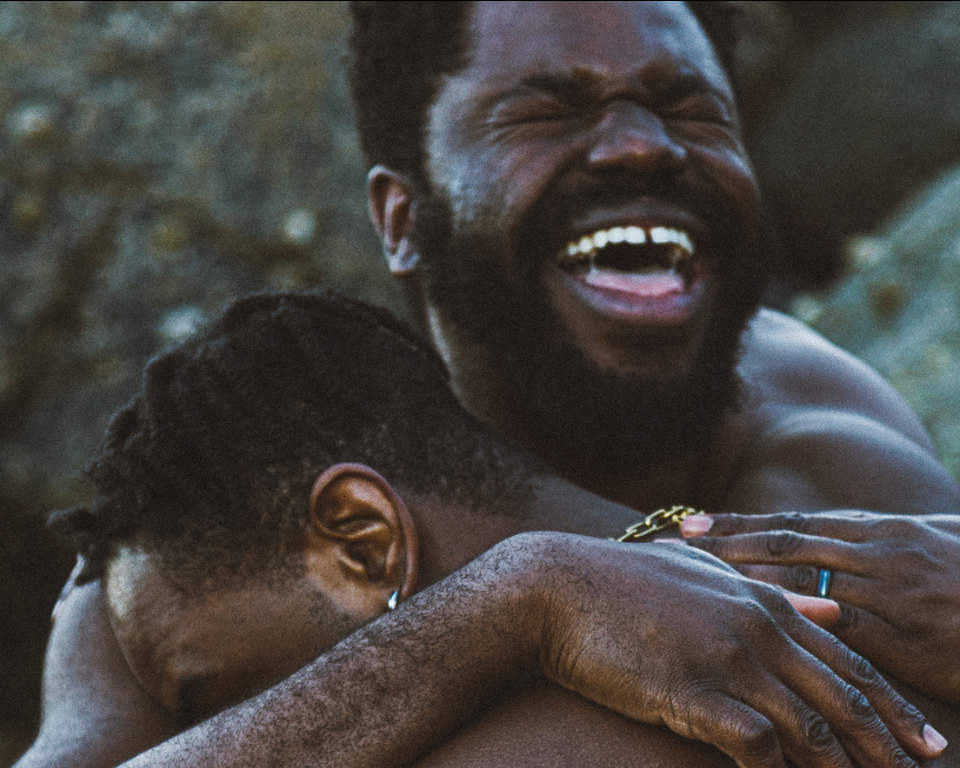
Samuel Yakura explores masculinity, grief and inherited silence at Dublin Fringe
Blending live music, slam spoken word and theatre, Samuel Yakura’s SOAK: The Perfect Man turns its attention to the pressures men learn to carry, and what happens when the performance of strength begins to give way.
How long can a man carry what he cannot name? is the question at the centre of the new work produced by Samuel Yakura and +353 and presented as part of this year’s Dublin Fringe Festival.
Part concert, part confession and part theatrical reckoning, SOAK combines live music, slam spoken word and performance to explore masculinity, grief and inherited silence through Mairuwa, a character attempting to live up to an ideal of manhood that becomes increasingly difficult to sustain.
For Yakura, the work began with the contradiction between outward capability and internal struggle.
“I was interested in the things men become very good at carrying without necessarily having language for them: grief, responsibility, fear, expectation, loneliness. Sometimes you can function incredibly well and still be drowning.”
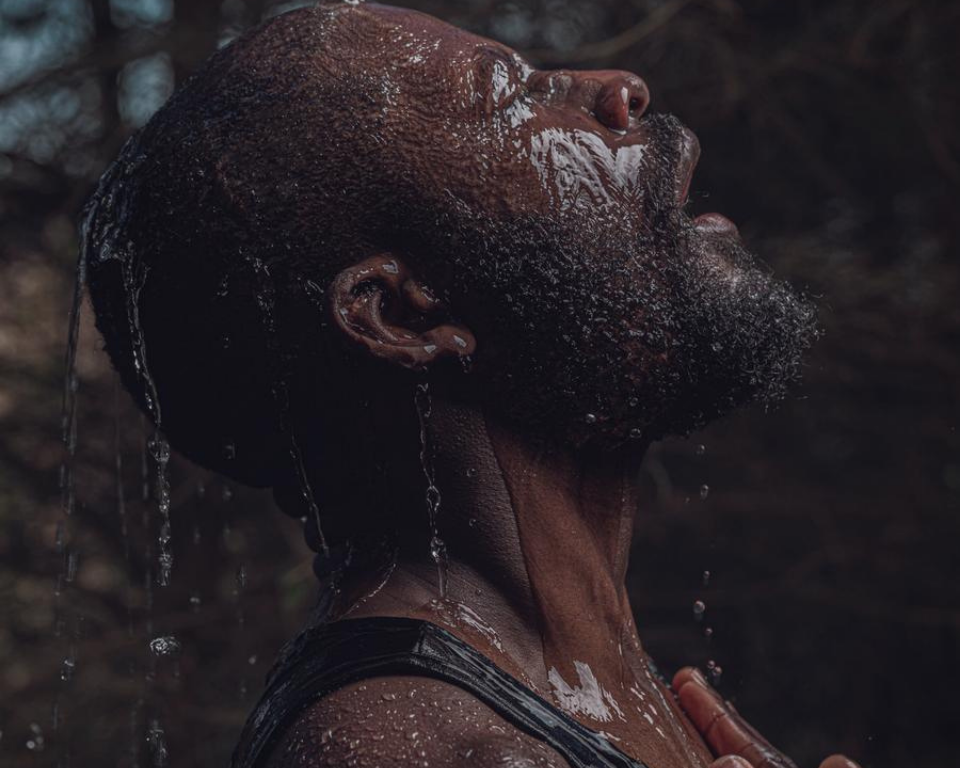
Water is a recurring image through which those pressures are explored. It also gives the production its title.
“SOAK came from the water imagery running through the whole piece: carrying, drowning, thirst, learning to receive rather than constantly pour,” Yakura says.
The Perfect Man, meanwhile, is deliberately ironic, referring to the impossible standard of “strength, usefulness and perfection” that its central character attempts to meet.
Rather than presenting an alternative prescription for what masculinity should look like, Yakura is interested in allowing those expectations and contradictions to coexist.
“I wasn’t interested in writing a rulebook for masculinity,” he says. “Mairuwa can be strong and frightened, funny and grieving, dependable and exhausted at the same time.”
The emotional territory of SOAK draws partly on Yakura's own experiences of family, grief and masculinity, although he resists describing the work as straightforward autobiography.
“The emotional world is definitely personal,” he says. “But it isn’t autobiography in a documentary sense. Mairuwa is a character, and the theatre allows me to stretch, fictionalise and transform those experiences.”
That distance between writer and character creates room for the production to move between the personal and the theatrical. It also allows Mairuwa's effort to control how he is perceived to become part of the drama itself.
At the beginning, the audience is implicated in that performance. “At first they are almost participants in the performance Mairuwa is giving,” Yakura says. “He wants to entertain them and control how they see him.”
As the work progresses, that relationship changes. The audience moves from being entertained by the character towards becoming witness to what lies beneath the performance.
“By the end, they feel closer to witnesses or confidants. They see what happens when the performance starts to crack.”
The production brings together three forms that have been central to Yakura's practice: spoken word, theatre and music. Their combination is not simply stylistic. Each is used to reveal a different part of Mairuwa's internal world.
“Spoken word gives the character precision and rhythm, theatre gives him conflict and transformation, and music reaches places that language sometimes can’t,” Yakura says. “For a story about someone struggling to say what he feels, that combination felt right.”
The live music consequently operates as more than accompaniment. Yakura describes it as “another nervous system in the play”, capable of supporting or disrupting Mairuwa and articulating emotions the character cannot put into words.
“Dawa and the musicians aren’t simply accompanying the story; they’re inside his emotional world.” It is an approach that places spoken word within a wider theatrical structure rather than treating it as an interruption to the drama. Rhythm and language become part of the characterisation, while music can take over at the points where language proves inadequate.
Although SOAK addresses questions that extend beyond a particular place, Yakura grounds the work in his Nigerian-Irish experience. “I think that specificity is important,” he says.
Living between cultures has also shaped his understanding of the different ways masculinity and vulnerability are expressed. Expectations may differ in their language or cultural context, but Yakura sees common pressures beneath them.
“The expressions might change, but a lot of men are still negotiating similar pressures: providing, performing competence, protecting people and knowing when it’s safe to admit that you’re struggling too.”
The production therefore avoids treating masculinity as a single, universal experience. Instead, family, culture and inherited expectations become part of the particular circumstances through which Mairuwa understands what is expected of him.
At the same time, Yakura believes the questions underlying that experience can travel beyond its Nigerian-Irish setting. “Family expectation, grief, responsibility, wanting to be enough for the people you love – those things aren’t limited to one culture.”
For all its engagement with vulnerability, Yakura does not want SOAK to conclude with a simple instruction that men should become better at expressing their feelings. He is more interested in what happens when audiences interrogate the conditions that make emotional silence necessary in the first place.
“I hope it’s less about leaving the theatre saying, ‘men need to be more vulnerable,’ and more about asking better questions,” he says. Those questions return the production to its central metaphor: what people carry, where they learned to carry it and whether they believe they have to do so alone.
“What am I carrying? Who taught me that I had to carry it alone? And what might happen if I allowed somebody else to hold some of the water?”
For Yakura, SOAK is also part of a developing body of theatre work. He is currently developing Citizens of Nowhere, exploring family, displacement and belonging, while his first poetry play, The Perfect Immigrant, is due to receive a new production with Corrib Theatre in Portland, Oregon, in 2027.
For now, SOAK: The Perfect Man brings those questions of identity, expectation and vulnerability to the Dublin Fringe Festival, using the language of concert, poetry and theatre to examine what remains when the effort to appear capable can no longer be maintained. This production is currently running in the Project Arts Centre until 12th September.